Ventilation · Answers
Why Is My Wolf Hood So Loud on High?
A Wolf hood that roars on high is usually fighting its own airflow rather than failing — greasy baffle filters, a damper that will not swing fully open, or a tight duct. A rattle that starts at one speed points at the blower wheel. If clean filters change nothing, Wolf Repair Woodinville, (425) 585-2373, finds which it is.
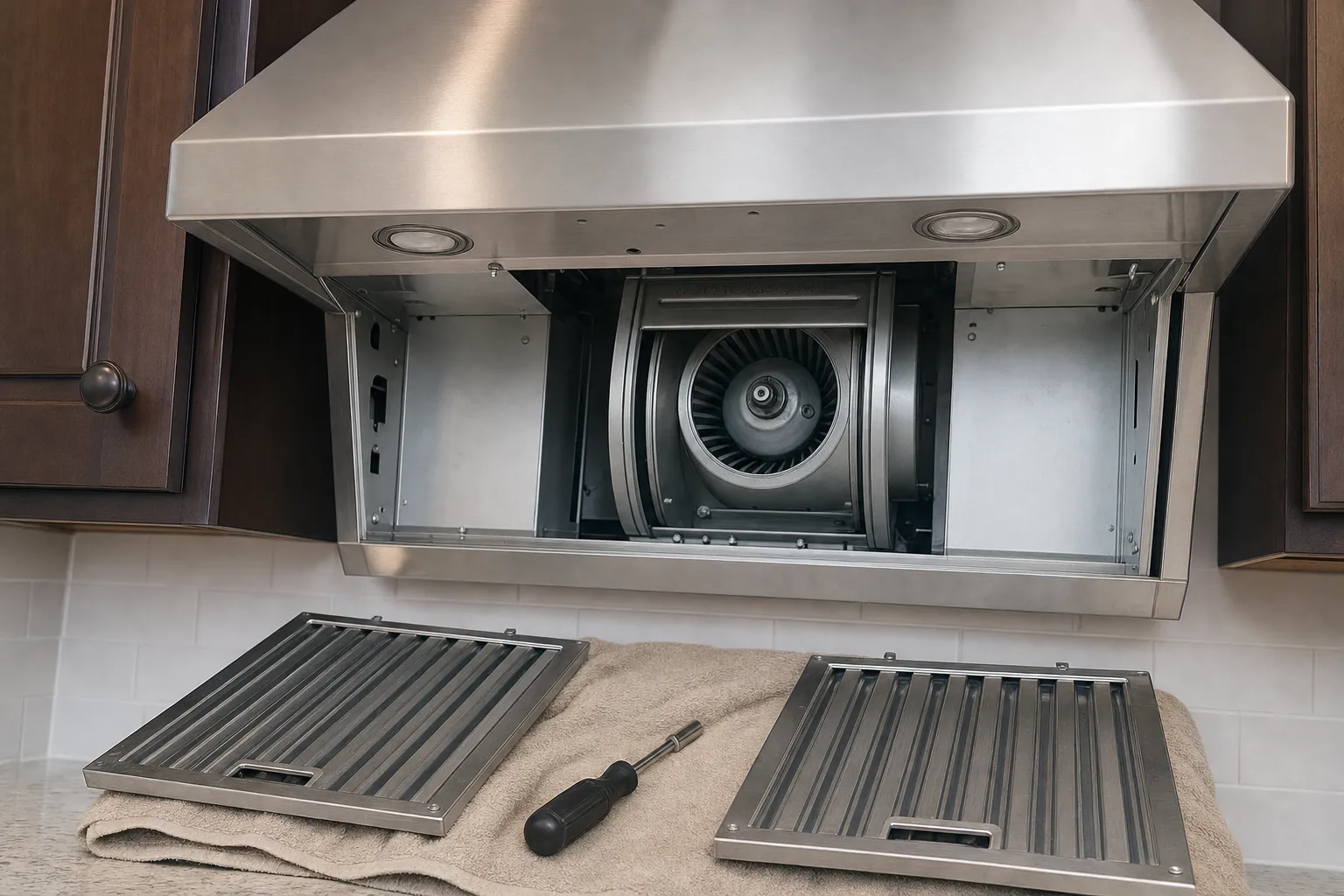
Two-Minute Check
Run it in order. Nothing here needs a panel off, a ladder or a wire touched.
- Run the blower on high for a full minute and listen: a steady rush is air moving, while a knock, tick or rattle means something is loose or out of balance.
- Switch the hood off, put gloves on, lift the baffle filters out and hold one up to a light — you should see cleanly through the slots.
- Wash greasy filters in the dishwasher, which Wolf designs them for, let them dry, refit them and run high again — the roar should soften.
- Step the speed down slowly from high and note any setting where a rattle starts or stops — that is the blower wheel telling you where it is out of true.
- Stop here — call Wolf Repair Woodinville, (425) 585-2373. Call (425) 585-2373
Why high is the loud setting
On high the blower moves the most air, so anything that chokes the path turns flow into sound. Grease in the baffles, a half-open damper and a long, narrow duct all do it.
The filters come first because they are the one restriction you can clear yourself.
When it is the machine, not the air
Wolf warns that building dust drawn into the blower can damage motor bearings and unbalance the wheel. A hood that turned loud after renovation work deserves a look at both.
A grinding note that rises with speed is bearings. A hood that goes quiet mid-cook and starts again later is its thermal overload stopping a hot motor — that one needs a visit too.